Carry-On Packing
Carry-On Packing List for a One-Week Trip
A carry-on list built around the two limits that actually bite: the sizer at the gate and the liquids rule. What goes in, what gets worn, and what to leave out.
Contains affiliate links — we may earn a commission at no cost to you. How this works
A carry-on list is not really a list of things. It is a list of two constraints, and everything else follows from them.
The sizer. Most US carriers publish a carry-on allowance near 22 × 14 × 9 inches (56 × 36 × 23 cm), but the number that matters is the metal frame at the gate, which does not care that your bag was that size before you packed it. Expandable bags fail here most often: they are within spec zipped in, and over it once expanded.
The liquids rule. Containers of 100 ml / 3.4 oz or less, in one quart-sized clear bag. Check your departure airport’s current rule before you fly — several airports have begun relaxing it as scanners are replaced, and the rule is not uniform.
Everything below assumes a one-week trip in mild weather, with laundry done once or not at all.
Clothes
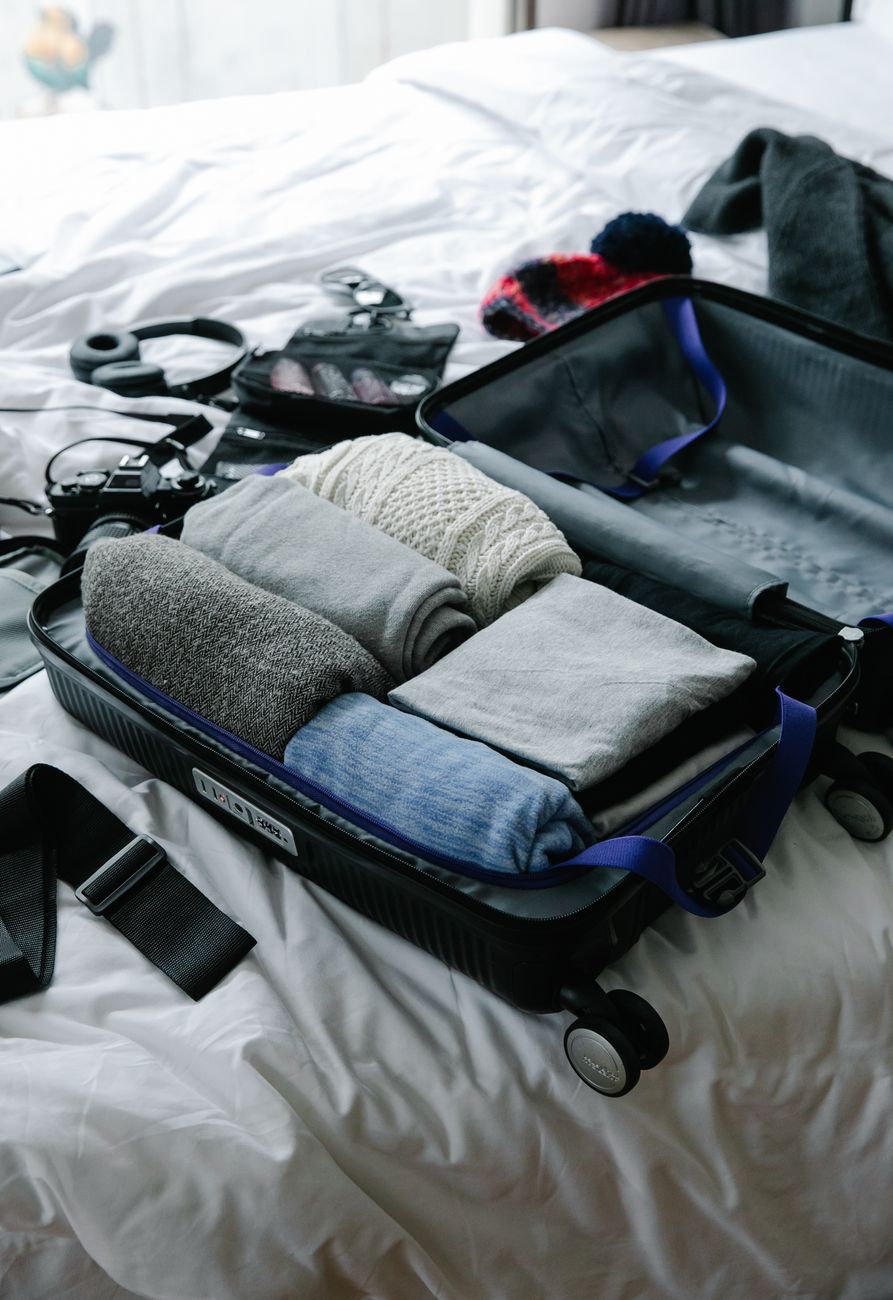
The working ratio for seven days is roughly three bottoms, five tops, one layer. That is fewer items than most people pack and more outfits than most people expect, because the whole point is that they combine.
- 3 bottoms — one worn on the plane
- 5 tops
- 1 mid layer (cardigan, overshirt, light fleece)
- 1 outer layer, worn, not packed
- 7 sets of underwear and socks
- 1 sleepwear set
- Swimwear only if the trip actually includes it
Wear the bulkiest items on the plane. Boots and the outer layer are the two biggest volume savings available, and they cost nothing.
The bag itself
Two decisions matter more than brand.
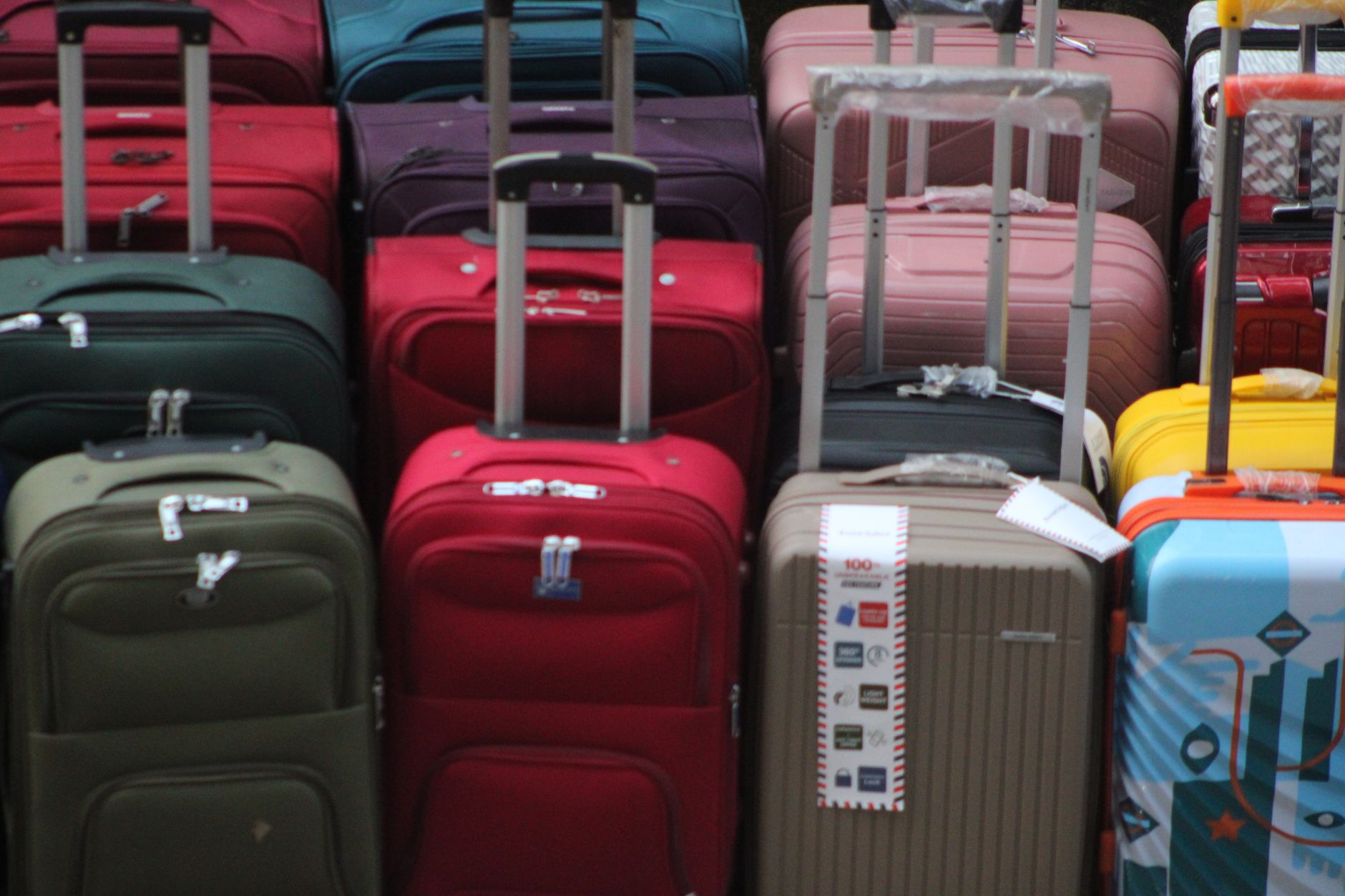
Hardside or softside. Hardside protects better and wipes clean. Softside has external pockets and gives slightly when the sizer is tight — which is the situation you are actually optimising for.
Two wheels or four. Four spinner wheels are easier in an airport and worse on pavement; they also sit outside the shell, eating a little of your allowance. Two in-line wheels sit inside the footprint and survive rough ground better.
If you fly a few times a year, the thing that fails first is usually the wheels or the handle, not the shell — which is worth knowing when comparing a warranty.
Packing cubes: what they do and do not do
Cubes do not create space. Compression sacks do, a little, by pushing air out of soft items.
What cubes actually buy you is that the bag stays packed. Without them, one search for a charger undoes the whole case, and the repack is always looser than the original. On a trip with several stops that difference compounds.
A workable set for one week: one medium cube for tops, one medium for bottoms, one small for underwear and socks, one compression sack for the layer you are not wearing.
Toiletries

Keep this ruthless, because it is the bag most likely to be pulled at security.
- Decanted liquids, 100 ml or less, in one clear quart bag
- Solid alternatives where they exist — bar shampoo and solid deodorant are not liquids and do not count against the bag
- Any prescription medication in its labelled container, in the cabin, not the hold
The checklist
- Bag — carry-on within 22 x 14 x 9 in / 56 x 36 x 23 cm, unexpanded
- Clothes — 3 bottoms, 5 tops, 1 mid layer, 7 underwear, 7 socks, 1 sleepwear
- Worn — outer layer, bulkiest shoes
- Cubes — 2 medium, 1 small, 1 compression sack
- Liquids — one clear quart bag, nothing over 100 ml
- Documents — passport, boarding pass, any visa, insurance details
- Tech — phone, charger, adapter, one cable per device, power bank in cabin
What to leave out
- A second pair of dress shoes. They are heavy, and a single versatile pair covers almost every one-week itinerary.
- Full-size anything. If it is sold in a travel size, the travel size is enough for seven days.
- “Just in case” layers. On a one-week trip in mild weather, the thing you did not pack is usually buyable at the destination for less than the cost of checking a bag.
What to actually buy
Best for most people
Carry-on spinners and softside bags
- Best for
- A one-week trip where the gate sizer is strict
- The catch
- Soft-side gives at the sizer but scuffs; the wheels usually fail before the shell
Worth adding
Packing cubes and compression sacks
- Best for
- Trips with more than one stop, where the bag gets reopened
- The catch
- Cubes do not create space — only compression sacks do, and only on soft items