
Closet Organization
Small Closet Organization Ideas That Survive a Real Week
How to get more out of a small closet without renovating: what to measure first, where the wasted space actually is, and the few things worth buying.
Contains affiliate links — we may earn a commission at no cost to you. How this works
Most small-closet advice starts with the shopping. That is the wrong end. A closet that is badly organised is usually not short of storage products — it is short of usable space, and the products get bought to fill space that was never the problem.
So this starts with measuring, then with the three places the space usually goes missing, and only then with what is actually worth buying.
Measure three numbers before you buy anything
Write these down. Almost every product decision falls out of them.
- Rail height to shelf. The vertical gap between the hanging rail and the shelf above it. If this is more than about 30 cm, you are storing air.
- Rail to floor. How much space sits under your shortest hanging items. Shirts and jackets usually leave 80–100 cm of dead floor space.
- Door swing or opening width. This decides whether drawers, bins or sliding boxes are even possible. A bin you cannot pull out is a bin you will stop using.
If the closet is rented and you cannot drill, measure the door width too — most over-door organisers assume a standard door thickness and quietly fail on thicker ones.
Where the space actually goes missing
Under the hanging rail

This is almost always the biggest single loss. A single rail with shirts on it wastes roughly half the closet’s volume. The fix is either a second rail hung from the first, or a set of boxes or drawers sized to that gap — which is why you measured it.
Above the shelf
The shelf-to-ceiling gap is usually treated as unreachable and left empty. It is the right place for things you touch twice a year: off-season bedding, winter coats, luggage. The constraint is not space, it is that you need a container you can get down one-handed.
The back third
Deep closets hide a strip at the back that nothing ever comes out of. If you cannot see it, you do not own it. Either make it the designated off-season zone or bring it forward with pull-out containers.
What is worth buying, and what is not
Worth it:
- A second hanging rail. The cheapest way to buy back volume, and it needs no tools if it hangs off the existing rail.
- Containers sized to a gap you measured. Not “closet boxes” in the abstract.
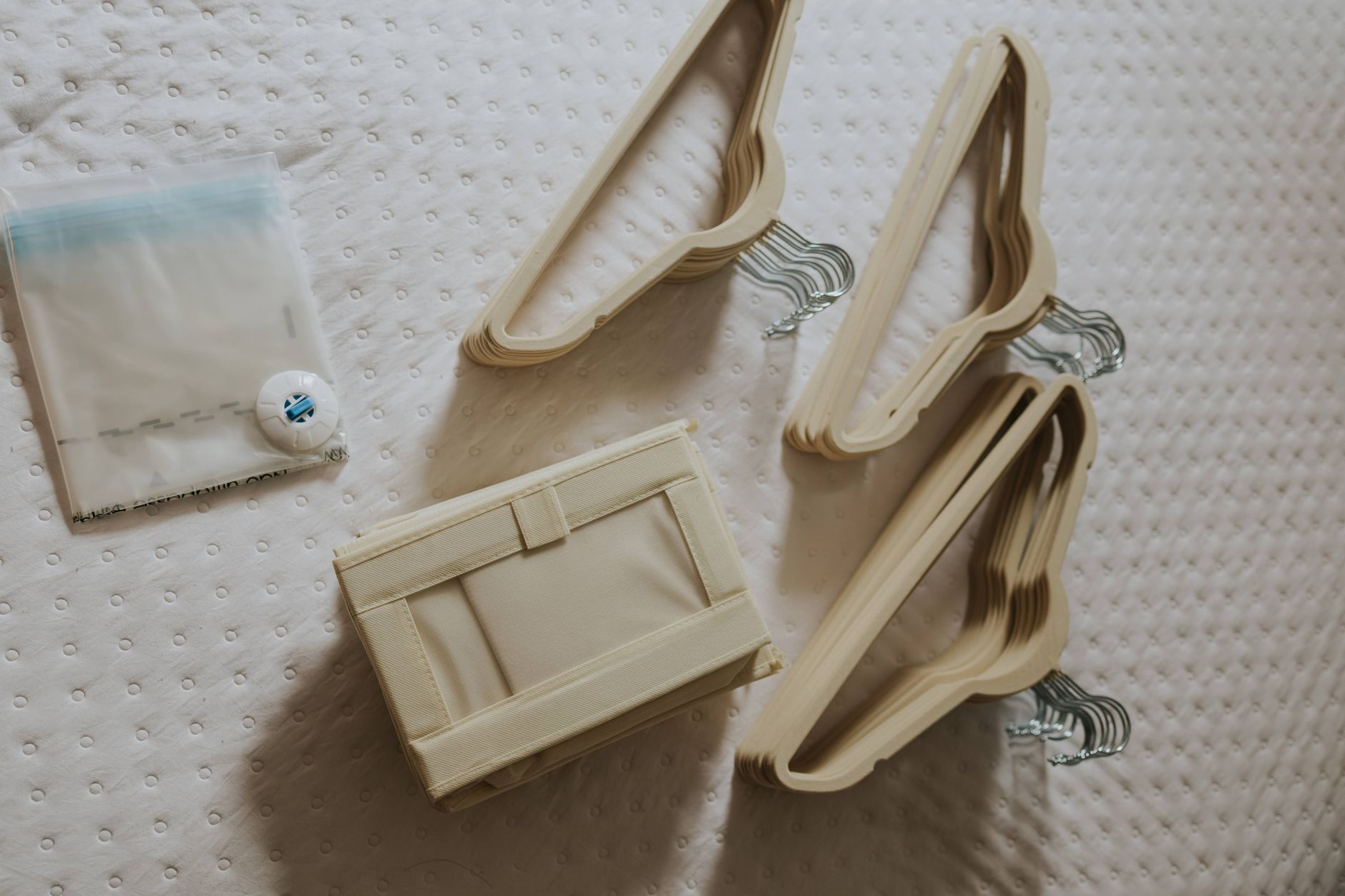
- Slim hangers, if your rail is full. They buy roughly a third more rail length, which is more than most shelving does.
Usually not worth it:
- Shoe racks that sit on the floor of a closet with dead space above them. You are paying to organise the one area that was already accessible.
- Vacuum bags for things you use. They work for off-season bedding. For clothes you wear, you will stop re-sealing them within a month.
Off-season clothes: the case for packing cubes

Packing cubes are sold for travel, but they are better than most dedicated storage boxes for off-season clothes in a closet. They are soft-sided, so they take the shape of an awkward gap, they stack without a rigid frame, and they are sized for folded clothes rather than for a catalogue photograph.
If you are already buying them for a trip, buying one size up for the shelf above the rail is the cheaper half of the decision.
When the closet is the wrong problem
If you have measured, cleared the dead space, and it still does not fit, the honest answer is that the closet is undersized for what you own. At that point the options are reducing what you keep or rebuilding the interior — and a design consultation is usually free, which makes it a cheap way to find out what a rebuild would actually cost before committing to it.
That is not an upgrade everyone needs. It is the right next step only when the free fixes are already done.
What to actually buy
Worth adding
Free closet design consultation
- Best for
- When the free fixes are done and the closet is still undersized
- The catch
- A paid rebuild, and only worth a conversation if you own the place
If that does not fit
Packing cubes (for seasonal storage, not just travel)
- Best for
- Trips with more than one stop, where the bag gets reopened
- The catch
- Cubes do not create space — only compression sacks do, and only on soft items