
Closet Organization
Renter-Friendly Closet Organization That Leaves No Marks
Closet storage when you cannot drill, paint, or change the rail: what holds weight without screws, what fails quietly, and how to get the deposit back.
Contains affiliate links — we may earn a commission at no cost to you. How this works
Renting removes the two moves that most closet advice depends on: drilling into the wall and replacing the rail. What is left still works, but thefailure modes are different — things fall down weeks later, or they leave a mark you only find at the end of the tenancy.
What holds weight without screws
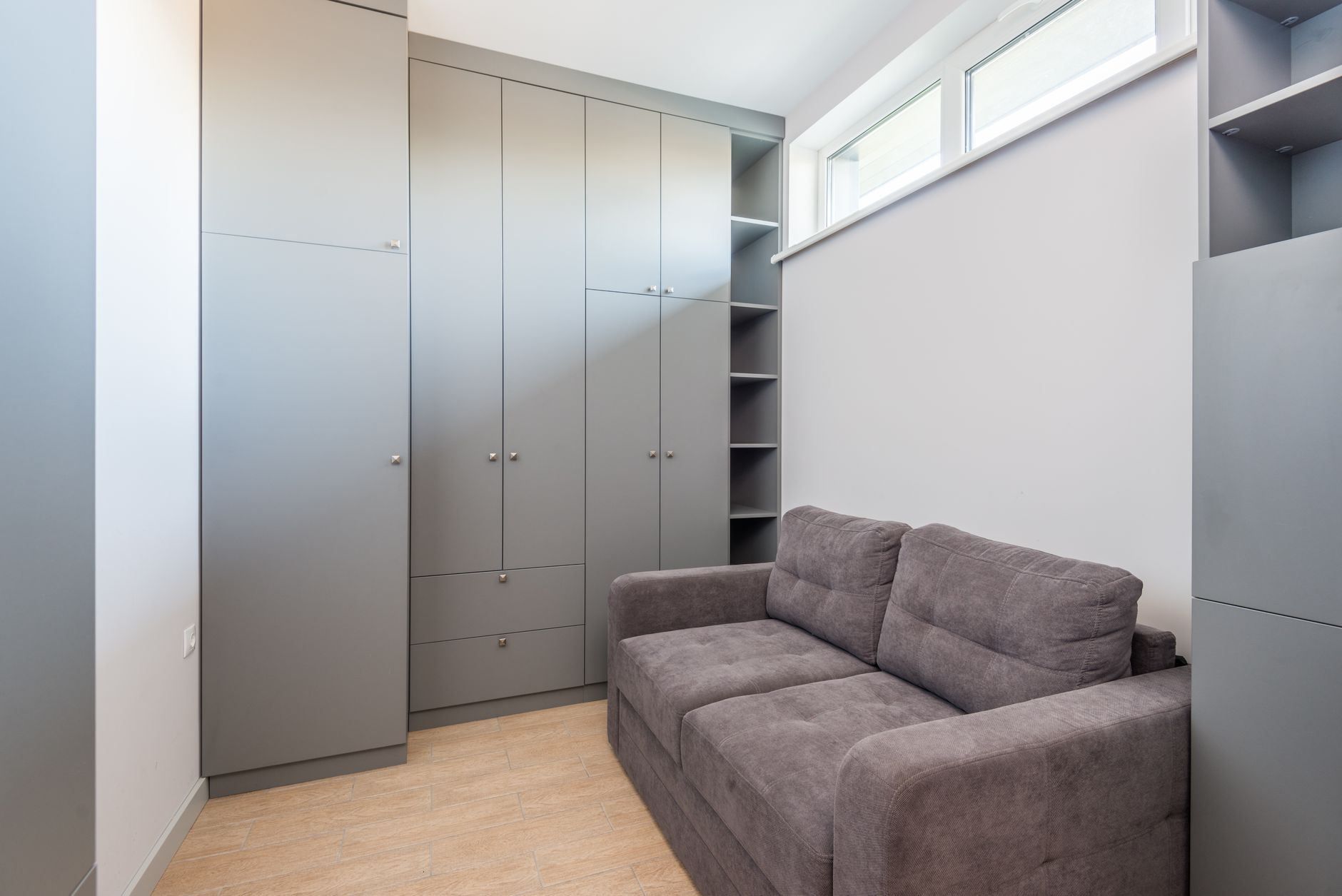
Hanging from the existing rail
The rail is already rated to hold clothes, and it is the one fixing point you are allowed to use. A second rail suspended from it, hanging shelf organisers, and over-rail hooks all borrow that rating.
The limit is the rail’s span, not its strength at the ends. A long unsupported rail with a second rail hung in the middle will bow. If the rail already sags when full, adding below it makes that worse.
Tension rods
A tension rod holds real weight when it is in compression between two solid surfaces — the two side walls of a closet. It holds very little when one end is on plasterboard without a stud behind it, and it fails by slipping, usually at night.
Set it, then hang on it and let go. If it moves at all, it will come down.
The floor
Not elegant, but the floor is the one surface with unlimited load rating and no deposit risk. Drawer units and stacked boxes under short hanging items are the highest-capacity renter-safe storage there is.
What quietly fails
Adhesive hooks on painted plasterboard. They hold the stated weight on day one. The failure is not the hook — it is that removing it takes the paint with it, and that comes out of the deposit. On tile and sealed wood they are fine.
Over-door hooks on a thick door. Most are sized for a door around 35–45 mm. A thicker door forces the hook open, and it either will not close or it scores a line into the door edge. Measure the door before buying.
Anything that needs the wall to be flat. Rental plasterboard rarely is. Rigid shelving units that assume a flat wall end up rocking.
A setup that works in most rented closets
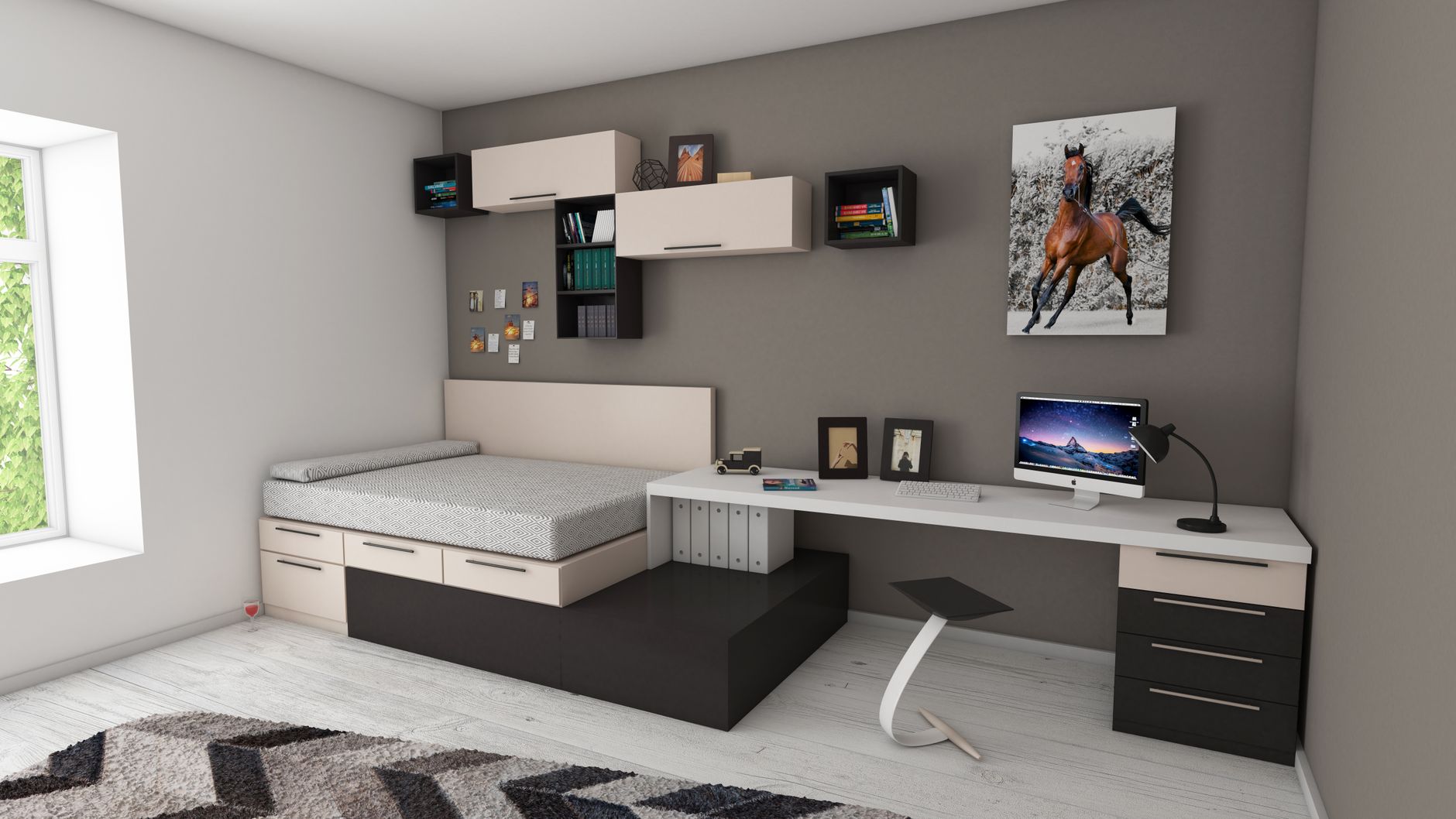
- Second rail hung from the existing one for short items — shirts, folded trousers. This is the single biggest volume gain and it is fully reversible.
- Soft cubes on the shelf above for off-season clothes. Soft sides take the shape of an awkward gap, which rigid boxes cannot.
- A drawer unit on the floor under the long hanging items, instead of a shoe rack. Shoes go on top of it.
- Slim hangers on the main rail, which buys roughly a third more rail length without touching the structure.
Nothing in that list is fixed to the building.
Why soft cubes rather than storage boxes
Shelf gaps in rented closets are rarely a standard size, and the shelf is often not square to the wall. A rigid box either fits or does not. A soft cube packed flat sits in a gap that is 2 cm short at one end, which is the normal case.
They are sold for luggage, which is why they are sized for folded clothes rather than for a catalogue photograph.
Before you move out
Take the second rail and tension rods down and keep them — they transfer to the next place, which is more than can be said for anything screwed in. Check the door edge and the paint behind any adhesive hooks while there is still time to touch it up.
If you own the place, none of these constraints apply and the calculation is different: a built-in interior uses the full height and depth in a way removable fittings cannot. A design consultation is normally free, which makes it a cheap way to see the cost before committing.
What to actually buy
Best for most people
Soft cubes for shelf and off-season storage
- Best for
- Trips with more than one stop, where the bag gets reopened
- The catch
- Cubes do not create space — only compression sacks do, and only on soft items
If that does not fit
Free design consultation (for when you own the place)
- Best for
- When the free fixes are done and the closet is still undersized
- The catch
- A paid rebuild, and only worth a conversation if you own the place