Carry-On Packing
How to Use Packing Cubes (and When They Make Things Worse)
Packing cubes do not create space — compression sacks do. What cubes are actually for, how to size a set, and the two situations where they cost you room.
Contains affiliate links — we may earn a commission at no cost to you. How this works
The most common claim about packing cubes is that they create space. They do not. A folded shirt takes the same volume inside a cube as outside it, plus the fabric and zip of the cube itself.
What they actually do is different, and worth more than the claim they are sold on.
What cubes are for
They keep the bag packed. Without cubes, finding a charger means unpacking the case, and the repack is always looser than the original. On a trip with several stops, that difference compounds until the lid will not close.
They make the bag searchable. Three labelled blocks beat one compressed mass when you are looking for something in a dark hotel room at 6am.
They force a decision at home, not at the gate. A cube is a hard budget: if the tops do not fit in the tops cube, you are not taking all the tops. That constraint is the actual mechanism. Most of the “space saved” people report comes from packing less, not from packing tighter.
Compression sacks are the ones that save volume
If the goal is genuinely less volume, that is a compression sack, not a cube. A sack with a one-way valve or a second zip squeezes air out of soft items — fleeces, puffer layers, towels.
Two things to know before relying on them:
- They work on air, not on fabric. Jeans and shoes compress by almost nothing, so the sack earns nothing there.
- They make the bag denser, not lighter. On a carry-on with a weight limit, compressing until it fits can put you over the weight allowance while staying inside the size one.
Sizing a set for a one-week carry-on
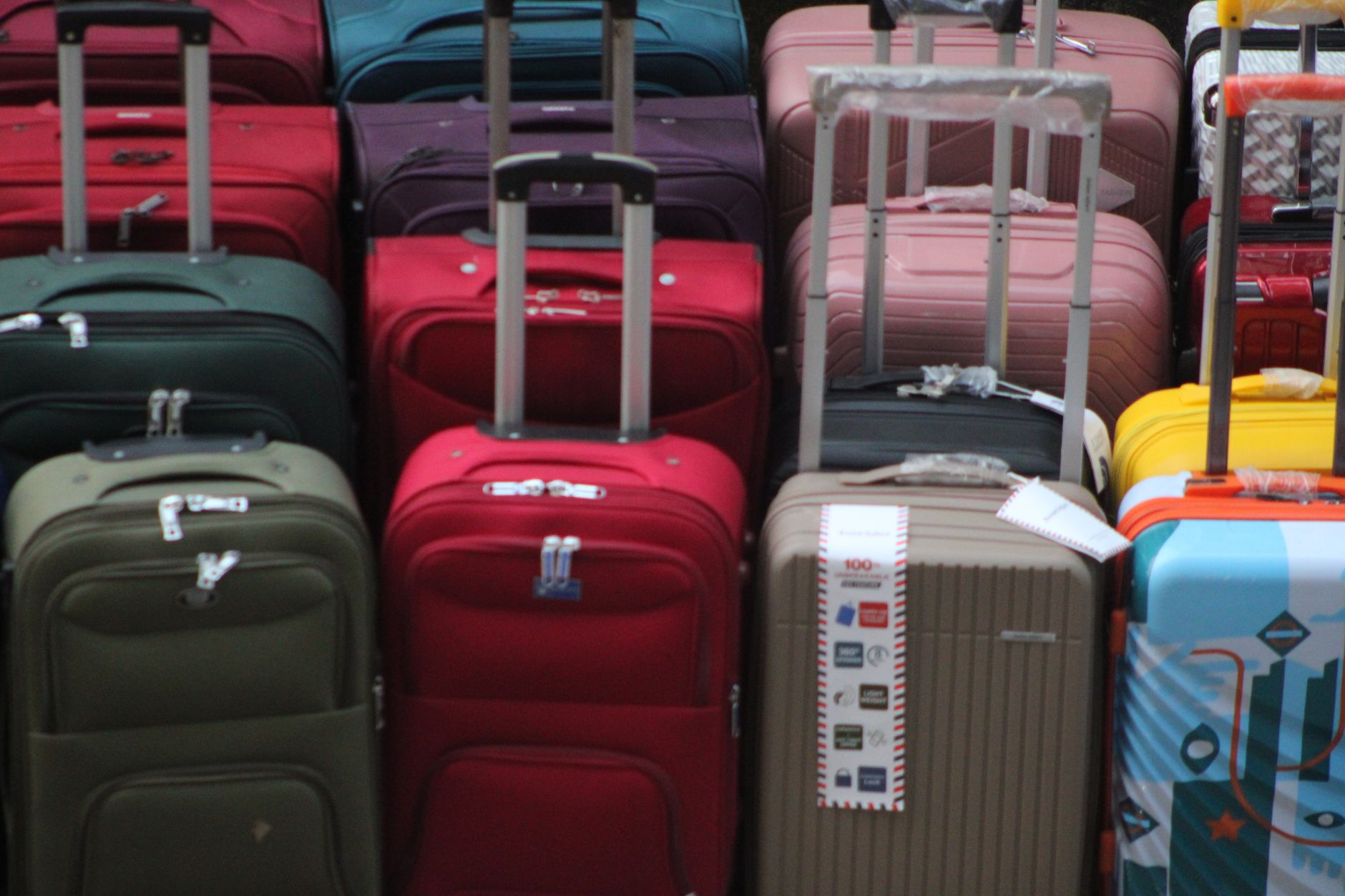
Buying a large set first is the common mistake. A carry-on does not have room for six cubes, and the extra ones end up unused.
A set that fits a one-week trip:
- 1 medium — tops
- 1 medium — bottoms
- 1 small — underwear and socks
- 1 compression sack — the layer you are not wearing
Check the cube dimensions against the internal measurement of your bag, not the external one. A carry-on at 22 × 14 × 9 inches has an interior several centimetres smaller once the shell, wheels and handle mechanism are accounted for, and a cube that is 2 cm too wide will sit diagonally and waste more room than it organises.
How to pack them
- Roll what creases badly, fold what does not. Rolling is not universally better; it is better for knits and worse for anything with a structured shoulder.
- Fill each cube to flat, not to bulging. A bulging cube stops stacking, which is the entire benefit.
- Heaviest cube at the wheel end. The bag stands up by itself and does not tip when you let go of the handle.
- Leave one cube partly empty for what you buy on the trip. A bag packed to 100% on the way out has a problem on the way back.
The two cases where cubes cost you room
An oddly shaped bag. Cubes are rectangles. In a round-ended duffel or a bag with a curved shell, rectangles leave triangular gaps that loose clothes would have filled. For those bags, soft stuff sacks beat rigid cubes.
A very short trip. For two or three days, the cube fabric and zips are a real fraction of what you are carrying, and there is not enough in the bag for the organisation to pay for itself.
Cubes earn their place from about four days upward, in a squared-off bag, on a trip with more than one stop. Outside that, they are neutral at best.
What to actually buy
Best for most people
Packing cubes and compression sacks
- Best for
- Trips with more than one stop, where the bag gets reopened
- The catch
- Cubes do not create space — only compression sacks do, and only on soft items
Worth adding
Carry-on bags sized for cube sets
- Best for
- A one-week trip where the gate sizer is strict
- The catch
- Soft-side gives at the sizer but scuffs; the wheels usually fail before the shell